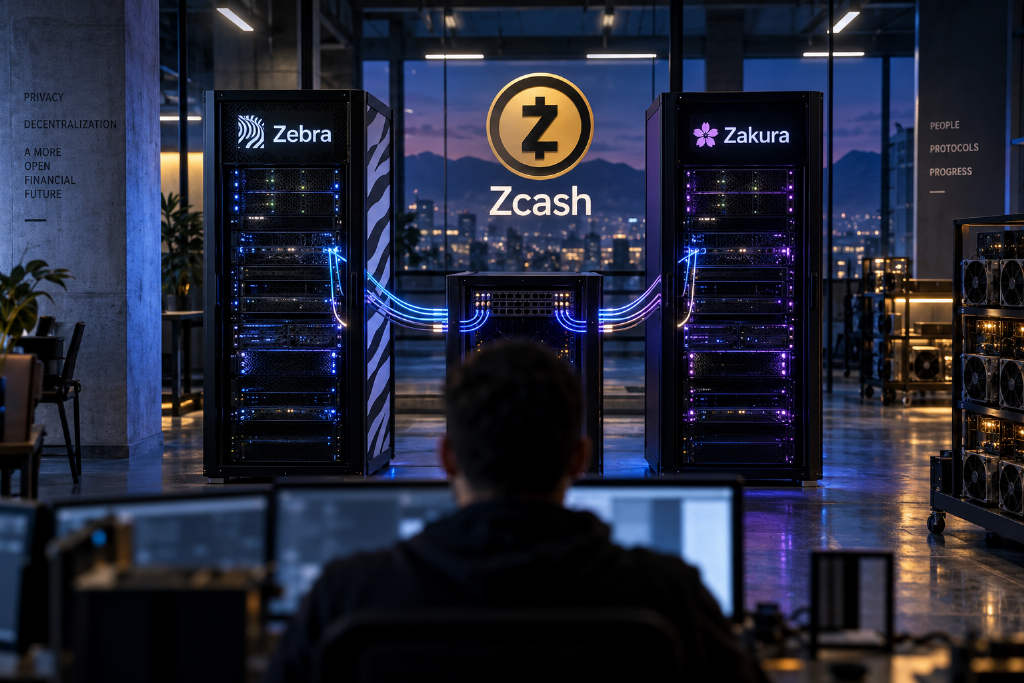
Zcash2026-10-03 12:04:08Zcash says it now has two independent full-node implementationsZcash said the network now has two independent full-node implementations that follow the same rules: Zebra and Zakura. The project said this raises a core question for the network: whether the presence of a second client materially changes Zcash’s level of decentralization, or whether hashpower remains the only factor that really matters. According to the announcement, Zebra is a Rust-based full-node implementation backed by the Zcash Foundation, while Zakura is another independent full-node client. The update focuses on client diversity and how much it may affect the network’s decentralization in practice.100
Bitcoin2026-07-22 18:06:53Libbitcoin Server can complete Bitcoin initial block download in 55 minutes, developer saysLibbitcoin developer @evoskuil said the latest version of Libbitcoin Server can complete a Bitcoin full node’s initial block download and full validation in 55 minutes. He attributed the speedup to a new GPU-based signature verification system that runs in parallel with standard script validation instead of being handled as a separate step. According to his description, the software does not stop to verify each ECDSA and Schnorr signature one by one. It captures signature checks, batches them, and sends them to the GPU while the rest of the validation process continues. @evoskuil said the approach can capture about 99.5% of signatures without blocking validation, removing the need for a second verification pass. If a batch signature check fails, the software traces the failure back to the relevant block and marks that block as invalid. He added that the design can batch nearly any number of signatures, allowing the GPU to stay ahead of the rest of the validation pipeline and sharply reduce full-node sync time.1400
Zcash2026-07-19 05:38:39Zcash launches Zakura full node with a stated goal of 50,000 transactions per secondZcash has introduced Zakura, a new full node maintained by a team separate from the Zcash Foundation. The release is described as a trimmed, fast-sync branch of Zebra and is compatible with the legacy zcashd client, which is set to reach end of life on July 18. According to the announcement carried by Odaily, Zakura is one part of Zcash’s broader scaling effort alongside Project Tachyon and research into private information retrieval. The stated objective is to reduce validation data and remove wallet performance bottlenecks so the network can scale toward Visa- and Mastercard-level throughput, or 50,000 transactions per second. Zakura also supports the Ironwood, or NU6.3, upgrade scheduled to activate on July 28. That upgrade adds a turnstile mechanism designed to limit withdrawals from the Orchard shielded pool and control counterfeit ZEC that could be produced by a long-standing soundness bug.1960
Zcash2026-07-19 05:38:50Zcash launches Zakura full node with support for Ironwood upgrade on July 28Zcash has introduced a new full node client called Zakura, according to ChainCatcher. The software is maintained by a team that operates independently of the Zcash Foundation and is released as a trimmed, fast-sync branch of Zebra. It also remains compatible with the legacy zcashd client, which is approaching the end of its lifecycle. The release is part of Zcash’s broader scaling effort. Alongside Project Tachyon and research into private information retrieval, Zakura is intended to help raise network throughput by reducing the amount of data required for verification and removing wallet performance bottlenecks. The stated target is to move throughput toward levels associated with Visa and Mastercard. Zakura also supports the Ironwood upgrade, or NU6.3, scheduled to activate on July 28. That upgrade adds a turnstile mechanism designed to restrict withdrawals from the Orchard shielded pool and control counterfeit ZEC that could have been created by a long-standing soundness bug.1930
Bitcoin2026-07-10 17:39:13U.S. Military Confirms Running a Bitcoin Full Node for Cybersecurity TestingThe U.S. military has publicly confirmed operating a Bitcoin full node and using the Bitcoin protocol in cybersecurity tests, signaling a broader shift in how Bitcoin is viewed in national security and cyber operations.1740
Bitcoin Node2026-05-29 12:00:11What Is a Bitcoin Node and How Does One Operate Independently?The Bitcoin network is not governed by a single entity but by thousands of independent computers known as nodes. These nodes form the backbone of decentralization by independently verifying and relaying transactions and blocks without trusting a central authority. This comprehensive guide examines the precise function of a Bitcoin node, distinguishing its critical verification role from the block-proposing role of miners. It breaks down the three main node types—full nodes, pruned nodes, and lightweight clients—comparing their storage requirements and verification depth. The article provides a balanced look at the pros and cons of operating a node, from enhanced privacy and network contribution to the ongoing resource costs and lack of direct financial rewards. A high-level, seven-step setup guide walks you through the hardware prerequisites, initial blockchain synchronization, and long-term maintenance habits needed to run a node reliably. Finally, it addresses common misconceptions, clarifying that while running a node does not generate income like mining, it is a fundamental act of participating in and strengthening the Bitcoin network's core promise of a trustless, peer-to-peer electronic cash system.600
Bitcoin2026-05-28 03:00:22Complete Guide to Bitcoin Nodes: What They Are, How to Run One, and Common QuestionsA Bitcoin node is a computer that independently verifies transactions and blocks without relying on a central party, keeping the network decentralized. Unlike miners that propose blocks, nodes enforce rules. Running your own full node improves privacy and supports the network, but brings no direct financial rewards. This article covers node types, node vs. miner distinctions, a step-by-step setup guide, and answers to frequently asked questions, offering a thorough understanding of what nodes do and how to run one yourself.1660